
Little-Known Disorder Can Take a Toll on Learning

by Dr. Risa Tabacoff
April 27, 2010 · Posted in Childrens Issues, Learning Disabilities, learning differences · 1 Comment 

Many children with auditory processing disorders are not diagnosed which can lead to trouble in school, behavior issues and low self esteem. The article below in the NY Times brings light to this important issue.

By TARA PARKER-POPE

Parents and teachers often tell children to pay attention — to be a “good listener.” But what if your child’s brain doesn’t know how to listen?

That’s the challenge for children with auditory processing disorder, a poorly understood syndrome that interferes with the brain’s ability to recognize and interpret sounds. It’s been estimated that 2 to 5 percent of children have the disorder, said Gail D. Chermak, an expert on speech and hearing sciences at Washington State University, and it’s likely that many cases have gone undiagnosed or misdiagnosed.

The symptoms of A.P.D. — trouble paying attention and following directions, low academic performance, behavior Read more

Concocting a Cure for Kids With Issues

by Dr. Risa Tabacoff
March 14, 2010 · Posted in Behavior Issues, Childrens Issues, Evaluation, Learning Disabilities, Testing · 4 Comments 

Below is a great article from a recent issue of The New York Times in the Health section discussing psycho-educational testing. For the original article, please click here.

By JUDITH WARNER
Published: March 10, 2010

If you’re the parent of a child who’s having trouble learning or behaving in school, you quickly find yourself confronted with a series of difficult choices.

You can do nothing — and watch your child flounder while teachers register their disapproval. Or you can get help, which generally means, first, an expensive and time-consuming evaluation, then more visits with more specialists, intensive tutoring, therapies, perhaps, or, as is often the case with attention issues, drugs.

For many parents — particularly the sorts of parents who are skeptical of mainstream Read more

What to Do if You Suspect a Learning Disability

by Dr. Risa Tabacoff
February 23, 2010 · Posted in Childrens Issues, Evaluation, LD, Learning Disabilities, Testing · 3 Comments 

Below is a great article from a recent issue of The New York Times in the Health section discussing psycho-educational testing. For the original article, please click here.

By LESLEY ALDERMAN
Published: February 19, 2010

The first sign may be that your bright child is having trouble reading, or organizing school assignments, or concentrating on homework. Your child may be frustrated with school, and you may find yourself frustrated with what looks like a lack of effort. And a teacher may also notice that something is amiss.

If you suspect that your child has a learning disability, and you’ve ruled out distractions like bad chemistry with the teacher or a social issue, your best recourse is to have the child tested.

The cost of getting a thorough assessment by a trained professional can be steep, often as much as $5,000. But that financial burden is not necessarily yours to bear: under federal law your local school district is obligated to assess your child Read more

College Board Changes Affect Students with Learning Disabilities

by Dr. Risa Tabacoff
October 7, 2009 · Posted in DAIC News, Learning Disabilities · 2 Comments 

Parents take note: Back in September 2003, two important changes by The College Board, which provides the SAT as well as the PSAT and AP tests, took effect changing how colleges view students with learning disabilities.

First any students who take the SAT’s (Scholastic Aptitude Test) with testing accommodations, such as extended time, will no longer have their scores “flagged” for colleges indicating that the “scores were obtained under special conditions”.

The admirable idea is to create a level playing field for those students with learning disabilities and prevent colleges from discriminating against them. Accommodations are granted to those students with learning disabilities who demonstrate a need based on psycho-educational testing and teachers input. A learning disability is defined as a significant Read more


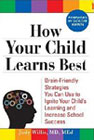
  • How Your Child Learns Best-
    Friendly Strategies You Can Use to Ignite Your Child's Learning and Increase School Success
    -by Judy Willis, MD, M. Ed

    A groundbreaking guide for parents that combines the latest brain research with the best classroom practices to reveal scientifically savvy ways to improve your child's success in school.
    Written by Judy Willis, MD, MEd, a board-certified neurologist who is also a full-time classroom teacher, How Your Child Learns Best shows you not only how to help your child learn schoolwork, but also how to capitalize on the way your child's brain learns best in order to enrich education wherever you are, from the grocery store to the car - a necessity in today's "teach to the test" world.
    By using everyday household items and enjoyable activities, parents of children ages three to twelve can apply targeted strategies (based on age and learning strength) in key academic areas, including:
    • Reading comprehension
    • Math word problems
    • Test preparation
    • Fractions and decimals
    • Oral reading
    • Reports and projects
    • Science and history
    • Reading motivation
    • Vocabulary
    Discover how to help your child increase academic focus and success, lower test stress while increasing test scores, increase class participation, foster creativity, and improve attention span, memory, and higher-level thinking.


    Paperback: 336 pages; Publisher: Sourcebooks, Inc. (September 1, 2008)

    ISBN-10: 1402213468 ISBN-13: 978-1402213465