
by daic
We’ve Got Issues- Children and Parents in the Age of Medication -by Judith Warner In this manifesto for change, New York Times blogger Judith Warner (Perfect Madness: Motherhood in the Age Read More

by daic
By Benedict Carey A version of this article appeared in print on November 22, 2014, in the New York Times. PROTESTS are flaring up in pockets of the country against Read More
by daic
Friendly Strategies You Can Use to Ignite Your Child’s Learning and Increase School Success -by Judy Willis, MD, M. Ed A groundbreaking guide for parents that combines the latest brain research with Read More
by daic
Parents take note: Back in September 2003, two important changes by The College Board, which provides the SAT as well as the PSAT and AP tests, took effect changing how colleges Read More

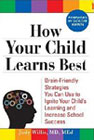 A groundbreaking guide for parents that combines the latest brain research with the best classroom practices to reveal scientifically savvy ways to improve your child's success in school.
Written by Judy Willis, MD, MEd, a board-certified neurologist who is also a full-time classroom teacher, How Your Child Learns Best shows you not only how to help your child learn schoolwork, but also how to capitalize on the way your child's brain learns best in order to enrich education wherever you are, from the grocery store to the car - a necessity in today's "teach to the test" world.
By using everyday household items and enjoyable activities, parents of children ages three to twelve can apply targeted strategies (based on age and learning strength) in key academic areas, including:
• Reading comprehension
• Math word problems
• Test preparation
• Fractions and decimals
• Oral reading
• Reports and projects
• Science and history
• Reading motivation
• Vocabulary
Discover how to help your child increase academic focus and success, lower test stress while increasing test scores, increase class participation, foster creativity, and improve attention span, memory, and higher-level thinking.
Paperback: 336 pages; Publisher: Sourcebooks, Inc. (September 1, 2008)
ISBN-10: 1402213468 ISBN-13: 978-1402213465

“Our only goal is to help children and adults fulfill their potential.”
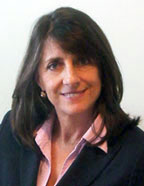
DAIC, founded by Dr. Risa Tabacoff, a NY State licensed psychologist has been successfully maximizing potential in children and adults for
over 20 years.
Serving the New York City Tri-State area with offices at 35-B Adams Street, Bedford Hills, NY 10507
SERVICES :
ABOUT DAIC :